Places to Visit in Sarnath: 15 Tourist Places, Stupas, Museum & Complete Guide (2026)
Direct Answer & Quick Trip Planner:
Top Sarnath Tourist Places: Sarnath features 15 major Buddhist heritage sights and monasteries located 10 km northeast of central Varanasi (30–45 mins via Ashapur flyover).
Top 3 Must-Sees:Dhamek Stupa (site of Buddha's first sermon), Sarnath Archaeological Museum (original Ashoka Lion Capital), and Mulagandha Kuti Vihar (Japanese murals, Bodhi tree & evening chanting).
Entry Fees: ASI combo ticket ₹25 (Indians) / ₹300 (Foreigners). All Buddhist temples are free.
Transit & Taxi Fare: Fixed AC sedan cab from central Varanasi is ₹900 one-way or ₹1,700 round-trip with 4–5 hours dedicated waiting.
(Need only published opening hours and Friday closure details? Go directly to our dedicated Sarnath timing guide).
Sarnath is one of the world's four primary Buddhist pilgrimage sites. Around 528 BCE, after attaining enlightenment in Bodh Gaya, Gautama Buddha walked to the Deer Park (Mrigadāva) here to preach his first sermon—the Dhammacakkappavattana Sutta ("Setting the Wheel of Dharma in Motion")—to his first five disciples.
Today, Sarnath is a green, open heritage enclave that offers welcome relief from the dense crowds of the Varanasi ghats. Within a walkable 1.5 km radius, you will find 2,250-year-old Mauryan stone pillars, 5th-century Gupta stupas, India's National Emblem, and living monasteries built by Buddhist communities from Thailand, Tibet, Sri Lanka, and Japan.
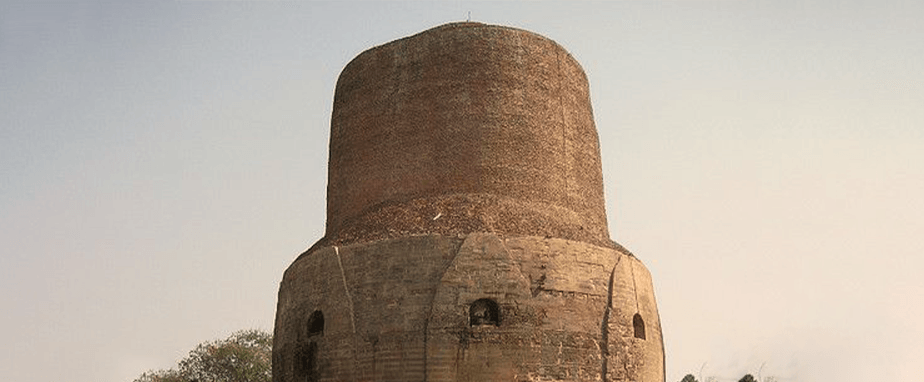
Dhamek Stupa and the ancient excavated monastery complex at Sarnath
Varanasi to Sarnath Private Cab & Sightseeing Fare Card (2026 Rates)
Skip street bargaining and auto haggling. Book a direct private cab with guaranteed waiting at the monument gate:
Vehicle Type
Capacity
One-Way Drop
Round-Trip (with 4–5 Hrs Sightseeing Waiting)
Best For
AC Sedan (Dzire / Etios)
4 Pax
₹900
₹1,700(Just ₹425/person)
Couples & small families
Ertiga (6-Seater)
6 Pax
₹1,300
₹2,400
Families with luggage
Innova Crysta
7 Pax
₹1,800
₹3,200
Premium executive comfort
12-Seater Tempo Traveller
12 Pax
₹2,236
₹2,472
Pilgrim sanghas & large groups
Auto-Rickshaw vs. AC Private Cab: A reserved auto costs ₹300–₹450 one-way and ₹600–₹800 return. However, open three-wheelers expose you to highway dust and heat along the Ashapur corridor, offer zero luggage custody, and drivers frequently rush waiting time after 90 minutes. A private AC sedan at ₹1,700 round-trip includes hotel pickup, AC comfort, secure luggage storage, and 4–5 full hours of driver standby right outside the ticket gate.
🚕 Book Varanasi to Sarnath AC Cab (Round-Trip with Waiting from ₹1,700)
Skip street auto haggling and highway dust. Get a private AC cab with hotel pickup, locked luggage custody, and 4–5 hours dedicated waiting at Dhamek Stupa and museum gates.
₹900 one-way drop · ₹1,700 round-trip (Dzire sedan — just ₹425/person for 4)
Archaeological Museum (Lion Capital) ⭐⭐⭐⭐⭐ (Priority #2): Houses the original 250 BCE Ashoka Lion Capital (India's National Emblem) and 5th-century Gupta Buddha masterpieces. (Closed Fridays).
Mulagandha Kuti Vihar ⭐⭐⭐⭐⭐ (Priority #3): Modern Buddhist temple featuring Japanese frescoes by Kosetsu Nosu, a golden teaching Buddha, and a sacred Bodhi tree.
Ashoka Pillar Site ⭐⭐⭐⭐⭐ (Priority #4): In-situ monolithic sandstone pillar shaft erected by Emperor Ashoka in 250 BCE with preserved mirror polish and Brahmi edicts.
Deer Park (Mrigadāva) ⭐⭐⭐⭐ (Priority #5): Peaceful gardens where the Buddhist Sangha was first established.
Tier 2: Highly Recommended Sights (Add 1 to 1.5 Hours)
Thai Temple (Wat Thai Sarnath) ⭐⭐⭐⭐: Golden multi-tiered roof, naga balustrades, and lush garden courtyard.
Japanese Temple (Nichiren): Serene Zen aesthetic, wooden interior, and quiet contemplation grounds.
Chinese Temple: Traditional Chan Buddhist architecture with dragon motifs and spiral incense coils.
Burmese Temple: Traditional pagoda spire and bronze bells.
Korean Temple: Modern minimalist Buddhist design.
Cambodian & Vietnamese Temples: Southeast Asian devotional shrines.
Top Sarnath Attractions & Monuments to See
1. Dhamek Stupa: The Main Buddhist Monument
The Dhamek Stupa is the visual and spiritual center of Sarnath. Standing 128 feet (39 meters) high and 93 feet in diameter, it marks the exact location where Buddha proclaimed the Four Noble Truths and the Noble Eightfold Path.
Gupta Stone Carvings: While the core is Mauryan brick, the outer stone casing dates to the 5th–6th century CE (Gupta period). Its lower stone circumference features eight projecting niches and intricate geometric, swastika, and lotus stone friezes.
Visitor Experience: Devotees and visiting monks perform clockwise circumambulation (pradakshina) around its base.
Photography Tip: Visit between 6:30 AM and 8:00 AM for soft morning light and clear unobstructed views before tour buses arrive.
Entry & Timing: Included in the general ASI site ticket. Open 6:00 AM–6:00 PM daily.
2. Sarnath Archaeological Museum & Ashoka Lion Capital
Established in 1910, this is the oldest site museum of the Archaeological Survey of India (ASI). It houses over 6,000 antiquities discovered during local excavations.
The Original Lion Capital of Ashoka (Gallery 1)
Carved around 250 BCE from a single block of polished Chunar sandstone, this 7-foot masterpiece originally stood atop the Ashoka Pillar outside:
Four Asiatic Lions: Seated back-to-back facing the four cardinal directions, symbolizing the worldwide proclamation of the Dharma.
The Abacus: Displays four 24-spoke Dharmachakras (Wheels of Law) separated by four animals: elephant, horse, bull, and lion (symbolizing stages of Buddha's life).
National Emblem: Adopted as the State Emblem of India on January 26, 1950. The Dharmachakra wheel was placed at the center of India's national flag.
Key Museum Galleries
Gallery
What to Look For
Time Needed
Gallery 1
Original Lion Capital, Mauryan umbrella fragments
15–20 min
Gallery 2
5th-century Gupta seated Buddha in Dharmachakra Pravartana Mudra
10–15 min
Gallery 3
Ancient monk dining utensils, terracotta seals, Brahmi inscriptions
10 min
Gallery 4 & 5
Medieval Bodhisattva and Tara sculptures, temporary exhibits
10 min
Operating Hours:10:00 AM to 5:00 PM (Last entry 4:30 PM). Strictly CLOSED every Friday.
Important Rule: Photography is strictly prohibited inside the museum galleries. Handbags, backpacks, and cameras must be deposited at the free cloakroom.
3. Mulagandha Kuti Vihar: Main Buddhist Temple
Built in 1931 by Anagarika Dharmapala (founder of the Mahabodhi Society), this is the active spiritual heart of modern Sarnath. It stands near the excavated site of Buddha's ancient meditation hut (Gandhakuti).
Japanese Frescoes: The temple's interior walls are covered with stunning frescoes painted in the 1930s by renowned Japanese artist Kosetsu Nosu, depicting the complete life story of Gautama Buddha from Lumbini to Kushinagar.
Sacred Bodhi Tree: In the temple courtyard stands a large Bodhi tree grown from a cutting brought from Anuradhapura, Sri Lanka—a direct botanical descendant of the original Bodh Gaya enlightenment tree.
Daily Evening Prayers (4:00 PM–5:00 PM): Visitors can sit quietly on the prayer hall mats while resident monks chant Pali scriptures. This is the most peaceful spiritual experience in Sarnath.
Entry & Timing: Free entry. Open 4:30 AM–11:00 AM and 1:30 PM–5:30 PM daily (lunch break 11:00 AM–1:30 PM).
4. Ashoka Pillar (Original 250 BCE Ashok Stambh)
Located 50 meters southwest of Dhamek Stupa within the excavated archaeological park:
In-Situ Shaft: The base of the original monolithic pillar (approx. 7.5 feet high) stands protected behind a railing at its original excavation site.
Mirror Polish: The 2,250-year-old glass-like Mauryan polish is still visible on the Chunar sandstone.
Schism Edict: The shaft carries Emperor Ashoka's inscription in ancient Brahmi script, warning against divisions within the Buddhist community.
5. Deer Park (Mrigadāva)
Surrounding the stupa area, this peaceful green park commemorates the forest where Buddha delivered his first teachings. Shaded stone benches, blooming gardens, and walking trails make it ideal for silent contemplation or walking meditation.
6. International Buddhist Monasteries
Sarnath hosts active monasteries built by Buddhist communities worldwide, each reflecting its native architecture:
Wat Thai Sarnath: Distinctive golden multi-tiered roof, ornate eaves (cho fa), and an 80-foot standing Buddha statue in the gardens.
Tibetan Monastery (Vajra Vidya Institute): Vibrant Himalayan Gelug monastery with colorful thangka paintings, butter lamps, and a perimeter lined with 20+ copper prayer wheels (spin them clockwise for blessings).
Sri Lankan Temple: Built around an elegant white dagoba, offering a calm, uncrowded atmosphere and traditional moonstone carving steps.
Japanese, Chinese, and Burmese Temples: Located within 500–800 meters of the central stupa, each showcases distinct national Buddhist art and architecture.
7. Monastery Ruins & Ancient Excavations
Surrounding Dhamek Stupa are the red-brick foundations of historic Buddhist monasteries (viharas) that accommodated thousands of scholars between the 3rd century BCE and 12th century CE. Walk along the elevated paths to view ancient monk cells, open-air courtyards, communal kitchens, and centuries-old water wells.
8. Chaukhandi Stupa: The Welcome Monument
Situated 1 km south of the main gate along the road from Varanasi:
Significance: Marks the exact spot where Buddha was welcomed by his five ascetic companions upon arriving in Sarnath.
Architecture: Originally built as a terraced rectangular brick stupa during the Gupta era, it was crowned in the 16th century by an octagonal tower built by Govardhan to commemorate Mughal Emperor Humayun's visit.
Sarnath Half-Day Tour Itineraries (2-Hour, 4-Hour & Full-Day)
Option A: 2-Hour Express Tour (Core Sights Only)
0:00–0:40: Walk Dhamek Stupa, Ashoka Pillar shaft, and ancient monastery ruins.
0:40–1:20: Sarnath Archaeological Museum (Lion Capital & Gupta sculptures).
Option B: 4-Hour Standard Half-Day Tour (Recommended)
8:30 AM: Depart Varanasi in your private AC cab.
9:00 AM: Explore the outdoor archaeological park and Dhamek Stupa in the cool morning air.
10:00 AM: Enter Sarnath Archaeological Museum right at opening time (avoid bus crowds).
11:00 AM: Visit Mulagandha Kuti Vihar, view Kosetsu Nosu's murals, and sit under the Bodhi tree.
11:45 AM: Visit Wat Thai Sarnath and spin the prayer wheels at the Tibetan Monastery.
12:30 PM: Stop at Chaukhandi Stupa before returning to Varanasi.
Option C: 6-Hour Full-Day Pilgrimage Tour
Includes all 15 attractions, extended meditation in the Deer Park, lunch at the International Buddhist Association canteen, and attending the 4:00 PM monk chanting ceremony at Mulagandha Kuti Vihar.
Note: All international Buddhist monasteries (Mulagandha Kuti Vihar, Thai, Tibetan, Sri Lankan) offer free entry; voluntary donations are welcome.
Ticketing Advice: Buy the unified ASI combo ticket at the main archaeological gate counter or online via the official ASI portal to avoid standing in two separate lines.
Camera Fees: Still photography is free in the outdoor ruins (camera fee ₹25 if commercial). Photography is strictly banned inside the museum.
Visitor Etiquette, Dress Code & Local Tips
Footwear & Socks: Shoes must be removed before entering temple prayer halls and when walking the perimeter of certain shrines. During summer (April–June), stone paths get very hot by midday—carry a pair of thick cotton socks.
Dress Respectfully: Wear clothing that covers shoulders and knees.
Temple Decorum: Avoid pointing your feet toward Buddha statues or monks. Sit cross-legged or kneel.
Circumambulation: Always walk clockwise around stupas, shrines, and Bodhi trees.
Beware of Touts: Outside the museum and parking lot, vendors frequently approach tourists selling fake "ancient coins" or uncertified peacock feathers for ₹500+. Politely decline and move on.
How to Reach Sarnath from Varanasi (Taxi, Cab & Auto Fare Guide)
Sarnath is located 10 to 12 km northeast of Varanasi's city center (Godowlia, Assi Ghat, or Cantt Railway Station).
By Private AC Taxi (Recommended for Comfort): A fixed-fare round-trip cab (₹1,700 for an AC sedan) includes doorstep hotel pickup, air-conditioned highway transit via the Ashapur flyover, and 4 to 5 hours of guaranteed waiting at the monument gate. Book via our Varanasi to Sarnath taxi guide.
For Large Families & Pilgrim Groups: A 12, 17, or 26-seater Tempo Traveller provides high-roof AC comfort and ample luggage storage. See our Varanasi to Sarnath Tempo Traveller guide.
By Auto-Rickshaw: Expect ₹300–₹450 one-way and ₹600–₹800 round-trip. Best suited for solo backpackers traveling light; open three-wheelers are exposed to heat and heavy traffic dust.
🚕 Book Varanasi to Sarnath AC Cab (Round-Trip with Waiting from ₹1,700)
Skip street auto haggling and highway dust. Get a private AC cab with hotel pickup, locked luggage custody, and 4–5 hours dedicated waiting at Dhamek Stupa and museum gates.
₹900 one-way drop · ₹1,700 round-trip (Dzire sedan — just ₹425/person for 4)
✅ ₹1,700 Flat Round-Trip·⏳ 4–5 Hrs Dedicated Waiting·❄️ AC · Parking Included·🛡️ Verified Local Drivers
Frequently Asked Questions About Sarnath Sightseeing
What are the main places to visit in Sarnath?
The essential sights are Dhamek Stupa, the Archaeological Museum (Lion Capital), Mulagandha Kuti Vihar, the Ashoka Pillar site, Deer Park, Chaukhandi Stupa, and the Thai and Tibetan monasteries.
Which day is Sarnath closed?
The outdoor archaeological park (Dhamek Stupa) and all Buddhist temples are open 7 days a week. Only the Sarnath Archaeological Museum is closed on Fridays.
How much does it cost to visit all Sarnath attractions?
Indian citizens pay ₹25 for an ASI combo ticket covering both the park and the museum. Foreign tourists pay ₹300. Entry to all international temples is completely free.
How much is taxi fare from Varanasi to Sarnath?
A private AC sedan costs ₹900 one-way or ₹1,700 round-trip with 4–5 hours of sightseeing waiting included. A 6-seater Ertiga is ₹2,400 round-trip.
When is the best time of day to visit Sarnath?
Early morning (7:00 AM–10:00 AM) offers cool weather, soft lighting for photography, and thin crowds. Late afternoon (3:30 PM–5:30 PM) is ideal for attending evening prayers at Mulagandha Kuti Vihar.
Book Your Sarnath Day Excursion
Combined 1-Day Itinerary: Book our Varanasi Sarnath Same Day Tour Package — private AC cab with waiting, luggage safe in car boot, licensed guide, and evening Ganga Aarti boat.
Round-Trip Cab Only: Book a Varanasi to Sarnath Taxi with 4–5 hours dedicated waiting at monument gates.
 Dhamek Stupa and the ancient excavated monastery complex at Sarnath